

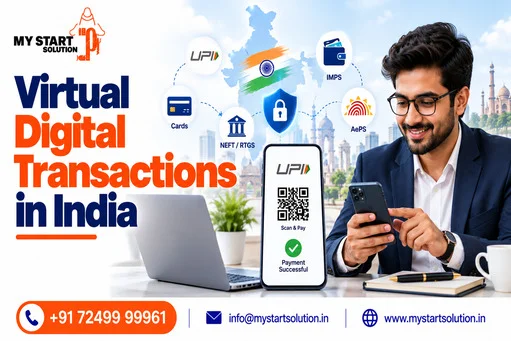
Virtual Digital Transactions in India
Virtual Digital Transactions in India help individuals and businesses manage digital payment activities through channels such as UPI, online banking, QR payments, and electronic transfers. Professional assistance can help with transaction documentation, payment processes, record management, and understanding applicable requirements.
Whats Included
- ✓ Digital transaction process guidance
- ✓ UPI, online payment and transaction support
- ✓ Transaction record and documentation assistance
- ✓ Basic reconciliation and compliance guidance
Get Free Expert Consultation
Virtual Digital Transactions in India
Virtual Digital Transactions in India refers to assistance related to managing and understanding transactions carried out through digital payment channels. Depending on the requirement, this may include guidance on t...
Digital payments have become an important part of everyday financial activity in India. Individuals, businesses, professionals, and organisations increasingly use UPI, QR codes, internet banking, cards, IMPS, and other electronic payment methods for receiving and making payments.
Virtual Digital Transactions in India refers to assistance related to managing and understanding transactions carried out through digital payment channels. Depending on the requirement, this may include guidance on transaction processes, payment records, documentation, reconciliation, and basic compliance considerations.
UPI, for example, allows users to make bank-to-bank payments, collect money, and use QR codes or UPI IDs for transactions. NPCI provides UPI and other digital payment infrastructure in India.
What Are Virtual Digital Transactions?
Virtual digital transactions are financial transactions completed electronically instead of through physical cash. The transaction may take place through a mobile application, banking platform, payment interface, QR code, card, or another authorised digital payment channel.
Common examples include:
- UPI payments and collections
- QR code-based payments
- Internet banking transfers
- IMPS transactions
- Digital bill payments
- Online business payments
- Electronic customer collections
- Digital payment records and transaction statements
The exact payment method available to a user depends on the bank, payment service provider, transaction type, and applicable rules.
Why Digital Transaction Management Matters
Digital transactions create electronic records, but businesses still need to maintain those records properly. A large number of payments can make it difficult to identify successful, pending, failed, refunded, or duplicated transactions without an organised process.
Proper transaction management can help businesses:
- Maintain clearer payment records
- Match payments with invoices or orders
- Identify pending or failed transactions
- Track customer collections
- Organise transaction statements
- Support bookkeeping and accounting processes
- Maintain relevant business documentation
- Understand payment-related requirements applicable to their activities
Professional support can be particularly useful when digital payments form a regular part of business operations.
Types of Digital Transactions in India
UPI Transactions
UPI is one of the major digital payment systems used in India. Users can make payments through UPI IDs, mobile numbers, QR codes, and supported applications. UPI also supports different transaction use cases, including person-to-person and person-to-merchant payments.
Businesses may use UPI for customer collections, vendor payments, service payments, and other eligible transactions.
IMPS Transactions
IMPS is a real-time electronic fund transfer service operated through participating banks and authorised payment ecosystem participants. It can be used for transferring money through supported banking channels.
QR Code Payments
QR-based payments allow customers to scan a payment QR using a supported application and authorise the transaction. Businesses commonly display QR codes at physical locations or use them as part of digital payment processes.
Internet Banking Transactions
Internet banking can be used for account-to-account transfers, vendor payments, business expenses, and other banking activities, subject to the bank's services and applicable conditions.
Digital Wallet and Other Payment Methods
Depending on the transaction and service provider, digital wallets, cards, prepaid instruments, and other electronic payment options may also be used. The applicable terms and transaction conditions can differ between payment methods.
How My Startup Solution Can Help
My Startup Solution provides professional assistance for businesses and individuals who need structured support around their digital transaction requirements.
The service can help you understand the transaction process, organise relevant records, and identify documentation that may be required for your particular business activity.
Support may cover areas such as
- Understanding digital transaction processes
- Reviewing available payment methods
- Organising transaction-related information
- Supporting payment record documentation
- Assisting with transaction reconciliation requirements
- Identifying relevant business documentation
- Providing guidance on applicable compliance considerations
The exact scope depends on the nature of the transaction and the customer's requirements.
Digital Transaction Records and Reconciliation
Keeping transaction records is important for businesses that receive payments through multiple channels. Payment records may need to be matched with invoices, sales records, bank statements, receipts, refunds, or other accounting information.
A basic reconciliation process can include:
- Collecting payment and bank statements
- Identifying transaction dates and reference numbers
- Matching payments with invoices or customer records
- Checking failed, reversed, or refunded transactions
- Identifying differences for further review
- Maintaining supporting records for accounting purposes
This process can make it easier to identify discrepancies and keep financial information organised.
Digital Payment Safety
Digital payment users should also pay attention to transaction security. NPCI advises users to be cautious of fake cashback links, suspicious QR codes, unknown applications, online scams, and requests designed to obtain sensitive payment information. Importantly, users should never disclose their UPI PIN or other authentication credentials to another person.
Professional assistance can help explain the process, but customers should always follow their bank or payment service provider's security instructions.
Digital Transactions and Business Compliance
Digital payment records may form part of a business's broader accounting and financial documentation. However, the tax, accounting, reporting, and regulatory requirements applicable to a transaction can vary according to the business structure, nature of payment, transaction value, and other circumstances.
For this reason, digital transaction assistance should not be treated as a substitute for transaction-specific legal, tax, or regulatory advice where such advice is required. For specialised requirements, My Startup Solution can help businesses understand what information and documentation may need to be reviewed before proceeding.
Who Can Use Virtual Digital Transaction Services?
This service may be useful for:
- Small and medium-sized businesses
- Startups and new businesses
- Online sellers
- Service providers
- Freelancers and professionals
- Businesses receiving customer payments digitally
- Businesses making regular vendor payments
- Organisations requiring organised transaction records
Whether assistance is required depends on the complexity and volume of the business's digital payment activities.
Benefits of Organised Digital Transaction Support
A structured approach to digital transactions can help businesses maintain better control over their payment information.
Key benefits include:
- Better organisation of transaction records
- Easier payment tracking
- Improved invoice-to-payment matching
- Clearer documentation
- Support for accounting and reconciliation
- Better understanding of available digital payment channels
- Reduced confusion when reviewing multiple payment records
Frequently Used Digital Payment Channels
India's digital payment ecosystem includes several payment methods and products. UPI is a payment system, while the digital rupee (e₹) is a digital form of the Indian rupee issued by the Reserve Bank of India. These should not be treated as identical concepts.
Businesses should select payment arrangements based on their actual operational requirements and the terms of the relevant bank or authorised payment service provider.
Why Choose Professional Assistance?
Digital payments may appear simple for individual transactions, but businesses often have to manage numerous payments, transaction references, customer records, invoices, refunds, and bank statements. Professional assistance can help bring structure to these activities and make it easier to understand which records and processes are relevant to the business.
My Startup Solution focuses on practical guidance based on the customer's stated requirements. The service can be useful when a business needs help organising its digital transaction process while keeping its documentation clear and understandable.
Get Support for Virtual Digital Transactions in India
If you need assistance with Virtual Digital Transactions in India, it is useful to first understand the type of payments involved, the parties making or receiving the payments, and the records that need to be maintained.
My Startup Solution can assist with understanding digital transaction requirements, organising relevant information, and identifying the documentation that may be needed for the next stage of your business process.
Advantages of Virtual Digital Transactions in India
Virtual Digital Transactions in India help individuals and businesses manage digital payment activities through channels such as UPI, online banking, QR payments, and electronic transfers. Professional assistance can help with transaction documentation, payment processes, record management, and understanding applicable requirements.
Faster Payments
Virtual digital transactions enable quick movement of funds through online banking, UPI, payment gateways, and other digital channels.
Convenient Business Operations
Businesses can receive and make payments remotely without depending on physical cash or in-person transactions.
Better Transaction Records
Digital payments create electronic records that can help businesses monitor collections, expenses, invoices, and financial activity.
Wider Customer Reach
Online payment options allow businesses to serve customers across different locations and provide more convenient payment methods.
Registration process
A simple four-step process, start to finish.
Choose a Digital Payment Method
Select suitable options such as UPI, bank transfer, payment gateway, wallet, or card payments based on the transaction requirements.Set Up the Payment Channel
Complete the required bank, payment service provider, or payment gateway setup and provide the necessary business details.Initiate the Transaction
The customer or business initiates the payment using the selected digital payment method and completes the required authentication.Verify and Maintain Records
Confirm the transaction status and maintain appropriate digital records for accounting, reconciliation, and compliance purposes.Types of Virtual Digital Transactions in India
- UPI Transactions: UPI enables instant bank-to-bank payments through mobile applications using UPI IDs, QR codes, or linked bank accounts.
- Online Bank Transfers: NEFT, RTGS, and IMPS can be used for transferring funds between bank accounts for business and personal transactions.
- Digital Wallet Payments: Digital wallets allow users to store payment information and make eligible online transactions conveniently.
- Payment Gateway Transactions: Businesses can accept online payments through payment gateways using cards, UPI, net banking, and other supported methods.
- QR Code Payments: QR-based payments provide a simple way for customers to make digital payments using compatible banking or payment applications.
- Card-Based Transactions: Debit and credit cards can be used for online purchases, service payments, and other eligible digital transactions.