
Pollution Control NOC
Pollution Control NOC helps eligible businesses obtain the required approvals from the relevant State Pollution Control Board or Pollution Control Committee. My Startup Solution assists businesses with application preparation, document verification, category identification, and compliance guidance to ensure they comply with applicable environmental regulations.
Whats Included
- ✓ Pollution Control NOC eligibility and business category assessment.
- ✓ Consent to Establish and Consent to Operate application assistance.
- ✓ Supporting document preparation and application review.
- ✓ Assistance with departmental queries, renewals, and amendments.
Get Free Expert Consultation
Pollution Control NOC
A Pollution Control NOC is a commonly used term for environmental permissions or consent approvals...
Businesses involved in manufacturing, construction, processing, trading, and other regulated activities may need approval from the relevant pollution control authority before establishing or operating their units. These approvals help ensure that business activities follow applicable environmental rules relating to air emissions, wastewater discharge, waste management, and pollution prevention.
A Pollution Control NOC is a commonly used term for environmental permissions or consent approvals issued by the relevant State Pollution Control Board (SPCB) or Pollution Control Committee (PCC). Depending on the business activity, location, and applicable regulations, an establishment may need Consent to Establish (CTE), Consent to Operate (CTO), or other specific environmental permissions.
My Startup Solution provides assistance with pollution control approval applications, document preparation, applicable category identification, and compliance-related requirements. The process depends on the nature of the business, its environmental impact, and the rules applicable in the relevant state or union territory.
What Is a Pollution Control NOC?
A Pollution Control NOC is a general term used for approval or clearance relating to environmental compliance. The exact approval required depends on the activity being carried out and the applicable laws.
The relevant pollution control authority may assess information about the proposed industrial unit, manufacturing process, pollution sources, waste generation, and proposed pollution-control measures before deciding whether to grant consent.
Businesses should identify the correct approval before starting construction, installing machinery, or commencing operations, wherever prior approval is required.
Types of Pollution Control Approvals
1. Consent to Establish (CTE)
Consent to Establish is generally required before establishing or expanding certain industrial units or other regulated facilities. The application may include details of the proposed site, manufacturing process, production capacity, water requirements, emissions, wastewater generation, and pollution-control arrangements.
2. Consent to Operate (CTO)
Consent to Operate is generally required before operating covered units after establishment, subject to the applicable regulatory framework. Authorities may review pollution-control arrangements, operational details, and compliance with the conditions attached to earlier approvals.
3. Other Environmental Permissions
Depending on the business, separate authorisations or approvals may apply to activities involving hazardous waste, biomedical waste, plastic waste, e-waste, battery waste, or other regulated materials. An environmental clearance may also be required for certain projects under applicable environmental legislation.
These approvals are not interchangeable. The appropriate requirements should be determined after reviewing the proposed activity and applicable rules.
Who Needs a Pollution Control NOC?
Pollution control approval may be relevant to businesses whose activities fall within the regulatory scope of environmental laws and consent requirements.
Common examples include:
- Manufacturing and industrial units.
- Factories and processing facilities.
- Chemical, pharmaceutical, and related manufacturing businesses.
- Food processing and certain commercial production units.
- Stone crushers, screening plants, and other regulated operations.
- Construction and infrastructure projects where environmental approvals apply.
- Facilities generating industrial wastewater or air emissions.
- Businesses handling regulated waste materials.
- Units expanding their production capacity or changing their manufacturing processes.
Not every business requires the same approval. Some activities may be exempt from particular consent requirements, while others may require additional permissions. The relevant authority's current classification and applicable exemptions should be checked before applying.
Our Pollution Control NOC Services
1. Business Activity and Category Assessment
The first step is to identify the proposed business activity and determine which pollution control requirements may apply.
Assistance may include reviewing the type of industry, manufacturing process, production capacity, location, pollution sources, and waste generation. The unit may then be assessed against the relevant classification system, including applicable Green, Orange, Red, or White categories where those classifications are used.
The category and approval requirements should be confirmed under the rules and directions applicable to the particular unit.
2. Consent to Establish Application Assistance
For businesses planning to establish or expand a regulated unit, assistance may include preparing the Consent to Establish application and organising the required supporting information.
Depending on the authority's requirements, documents may include:
- Business registration and identity documents.
- Proof of ownership, lease, or lawful possession of the premises.
- Site plan and location details.
- Project report and manufacturing process information.
- Proposed production capacity and machinery details.
- Water consumption and wastewater generation estimates.
- Air emission sources and proposed control measures.
- Details of waste generation and disposal arrangements.
The exact list varies according to the activity, state, and application category.
3. Consent to Operate Application Assistance
Businesses that have established their units may require Consent to Operate before commencing regulated operations.
Support may include reviewing existing approvals, checking the status of pollution-control installations, compiling operational details, and preparing the application documents required by the relevant authority.
Where applicable, the application may require details of effluent treatment plants, air pollution control equipment, waste disposal arrangements, monitoring reports, or compliance with the conditions of the Consent to Establish.
4. Documentation and Application Review
Incomplete or inconsistent information can lead to queries or delays during application processing. Reviewing the application before submission helps businesses identify missing documents and discrepancies.
My Startup Solution can assist with organising supporting records, checking application details, preparing information in the required format, and identifying items that may need clarification before filing.
5. Responses to Departmental Queries
The pollution control authority may request additional information, clarification, or supporting documents during its review.
Assistance may include understanding the query, compiling relevant evidence, preparing draft explanations, and organising supplementary documents. Any response should accurately reflect the business's operations and the environmental measures actually in place.
6. Renewal, Amendment, and Compliance Guidance
Existing approvals may have validity periods and conditions that businesses need to monitor. Changes in production capacity, machinery, processes, premises, or pollution-control arrangements may also require regulatory review.
Support may include checking approval conditions, reviewing renewal requirements, identifying potential amendment requirements, and preparing relevant application documents. The need for renewal or amendment depends on the applicable rules and the terms of the approval.
Documents Required for Pollution Control NOC
The documents required depend on the approval type, business category, and state authority. Commonly requested documents may include:
- PAN and business constitution documents.
- GST registration details, where applicable.
- Land ownership documents or a lease agreement.
- Site plan and layout.
- Project report or process description.
- Details of raw materials, machinery, and production capacity.
- Water consumption and wastewater disposal details.
- Air pollution control and effluent treatment system information.
- Waste management plans and supporting authorisations, where applicable.
- Existing consent orders or environmental approvals, if available.
The authority may require additional technical reports, photographs, monitoring results, or other supporting evidence for particular activities.
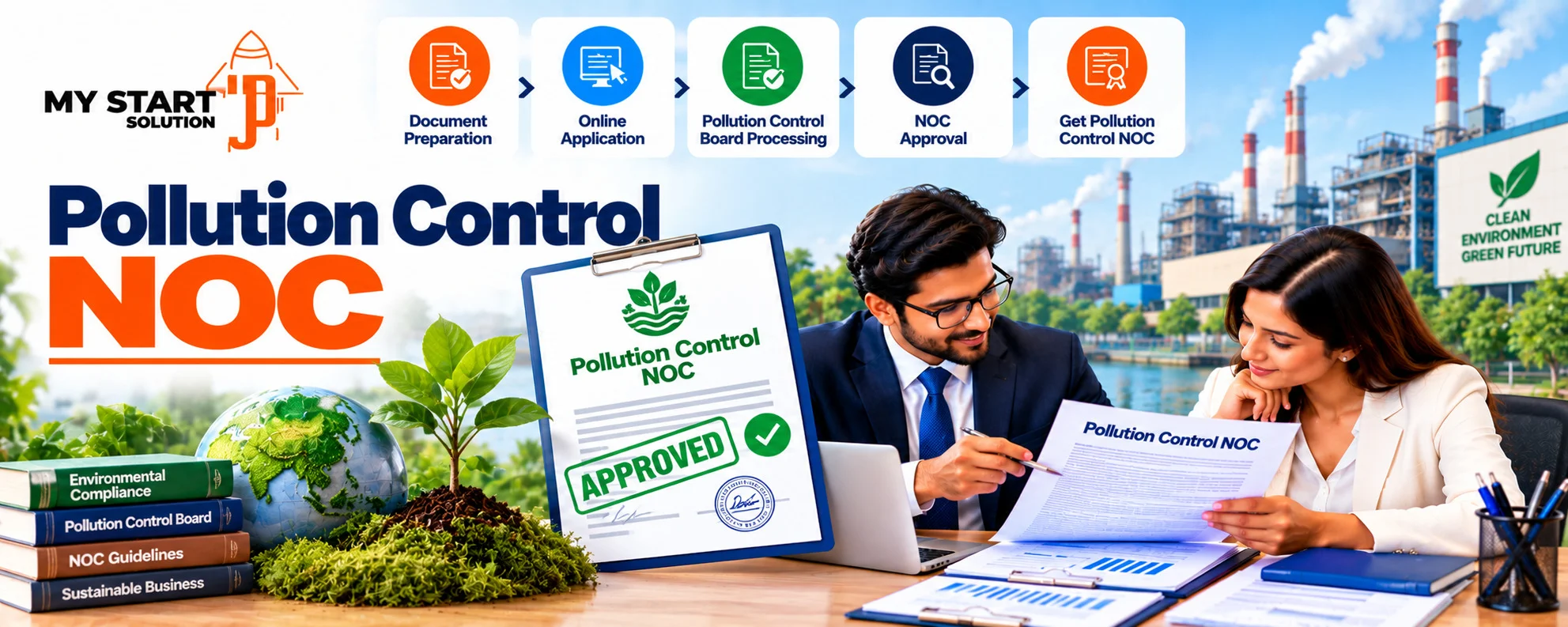
Process to Apply for a Pollution Control NOC
Step 1: Identify Applicable Requirements
Review the business activity, location, environmental impact, and relevant regulatory category to determine the approvals needed.
Step 2: Prepare Documents
Collect business records, site information, process details, and technical documents required for the application.
Step 3: Submit the Application
File the relevant application through the applicable State Pollution Control Board or Pollution Control Committee portal or prescribed procedure.
Step 4: Respond to Queries
Provide additional information or clarification if requested by the authority. An inspection or technical review may be required depending on the case.
Step 5: Receive and Review the Decision
If approved, review the consent order carefully, including its validity, conditions, and compliance requirements. Approval is subject to the authority's assessment and decision.
Why Choose Professional Pollution Control NOC Assistance?
Environmental approval requirements can differ significantly across industries and states. Professional assistance can help businesses understand the applicable process and organise the required information.
My Startup Solution helps clients with:
- Identifying potentially applicable consent and approval requirements.
- Preparing and reviewing application documents.
- Organising technical and business information.
- Addressing application queries and documentation gaps.
- Understanding approval conditions and follow-up requirements.
Professional assistance does not guarantee approval or eliminate the need to meet environmental standards. The business remains responsible for providing accurate information and complying with applicable laws and consent conditions.
Eligibility Criteria for Pollution Control NOC
- Type of Business Activity: Businesses involved in manufacturing, processing, construction, healthcare, hospitality, or other activities that may cause pollution must check whether they need a Pollution Control NOC or consent from the relevant State Pollution Control Board.
- Applicable Pollution Category: The business must identify its applicable pollution category, such as Red, Orange, Green, or White, based on its activities and the current classification rules.
- Suitable Business Premises: The proposed business location must comply with applicable environmental regulations, zoning requirements, and pollution control conditions.
- Pollution Control Arrangements: Depending on the nature of the activity, businesses may need suitable arrangements for wastewater treatment, air emission control, solid waste management, and noise reduction.
- Required Registrations and Approvals: Applicants may need business registration documents, premises-related records, and other industry-specific permissions, depending on the applicable requirements.
- Compliance with Environmental Rules: The applicant must meet the relevant environmental standards and consent conditions prescribed by the concerned pollution control authority.
Documents required
Documents Required for Pollution Control NOC
Registration process
A simple four-step process, start to finish.