
GST Scheme Change
GST scheme change helps eligible businesses move between the regular GST scheme and the composition scheme, subject to applicable GST rules. My Startup Solution assists with eligibility checks, documentation, application preparation, and compliance guidance to help businesses manage the transition correctly.
Whats Included
- ✓ GST scheme eligibility and suitability assessment.
- ✓ Assistance with required GST scheme change documentation.
- ✓ Guidance on the applicable application, declaration, or filing procedure.
- ✓ Support with understanding post-change GST compliance and input tax credit implications.
Get Free Expert Consultation
GST Scheme Change
GST scheme change generally refers to moving from the regular GST scheme to the Composition Scheme or from the Composition Scheme to the regular GST scheme, subject to eligibility conditions and applicable GST prov...
Choosing the right GST scheme is important for managing your business taxes and compliance responsibilities. As your business grows, your turnover changes, or your customer base expands, you may need to review whether your existing GST scheme still suits your business requirements.
GST scheme change generally refers to moving from the regular GST scheme to the Composition Scheme or from the Composition Scheme to the regular GST scheme, subject to eligibility conditions and applicable GST provisions. The process, effective date, and compliance requirements depend on your current registration status and the type of change involved.
My Startup Solution provides GST scheme change assistance to help businesses understand their options, prepare the required information, and follow the applicable GST procedures.
What Is a GST Scheme Change?
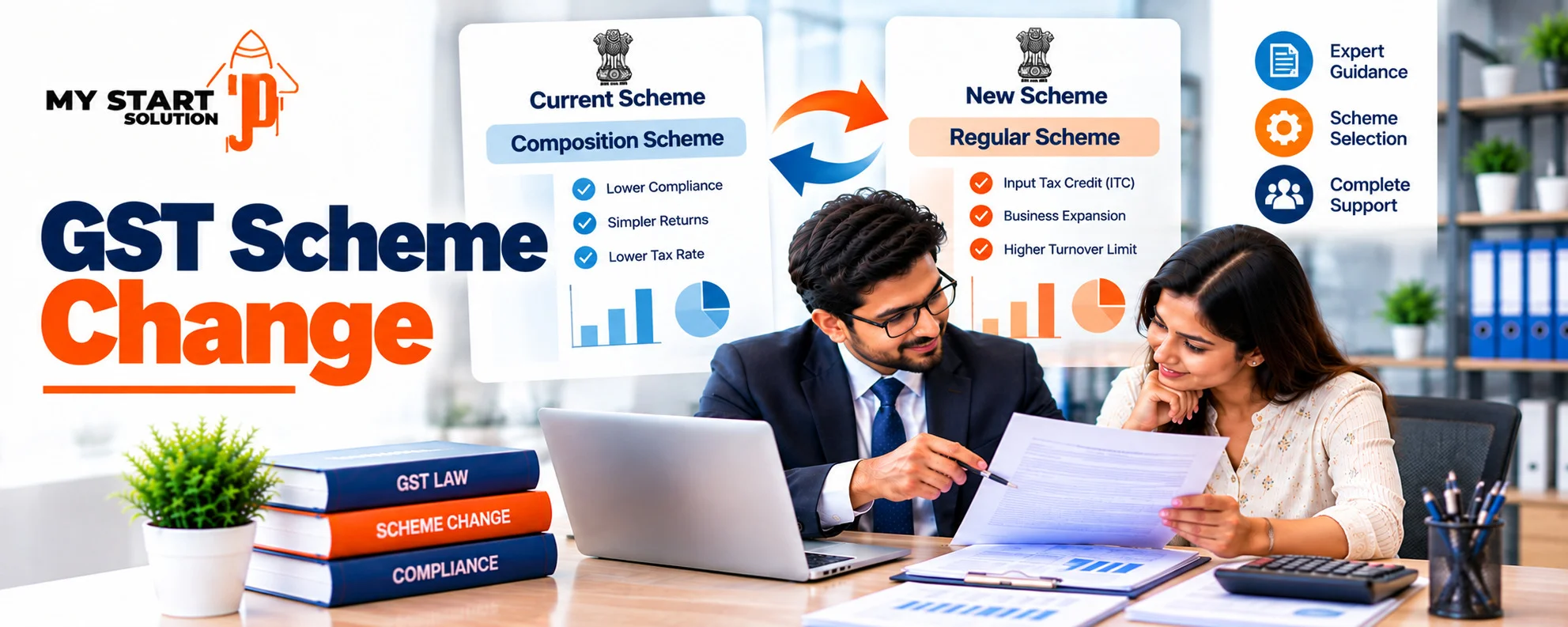
A GST scheme change is a transition between different GST tax schemes available to eligible registered taxpayers. Under India's Goods and Services Tax system, eligible businesses may choose between the regular GST scheme and the Composition Scheme, subject to the relevant conditions.
The regular scheme generally involves charging GST on taxable supplies, claiming eligible input tax credit, and filing applicable GST returns. The Composition Scheme offers a simplified compliance structure to eligible taxpayers, but it comes with restrictions on eligibility, tax collection, and input tax credit.
A business may need to change its scheme when its operational requirements, turnover, customer profile, or eligibility status changes.
Types of GST Scheme Changes
The main types of GST scheme changes include:
- Composition to Regular Scheme: A taxpayer may move to the regular scheme voluntarily or when the business becomes ineligible for the Composition Scheme.
- Regular to Composition Scheme: An eligible taxpayer may opt for the Composition Scheme after checking the applicable turnover limits, business conditions, and procedural requirements.
The rules and timelines differ depending on the direction of the change. Businesses should confirm their eligibility and effective date before making the transition.
Who Needs GST Scheme Change Services?
GST scheme change services may be useful for:
- Small businesses considering the Composition Scheme to simplify eligible GST compliance.
- Traders and manufacturers reviewing their GST scheme as their business grows.
- Businesses that no longer meet the eligibility requirements of the Composition Scheme.
- Taxpayers planning to expand their operations or serve different customer categories.
- Businesses that need professional guidance on GST scheme selection and related filings.
Not every business can choose either scheme. Eligibility depends on the applicable GST rules, the nature of supplies, turnover, and other statutory conditions.
Regular GST Scheme vs Composition Scheme
Understanding the differences between the two schemes helps businesses make informed decisions.
Regular GST Scheme
Under the regular GST scheme, registered taxpayers generally charge applicable GST on taxable supplies and may claim eligible input tax credit on qualifying business purchases, subject to the law.
Key considerations include:
- Applicable GST returns and reporting requirements.
- Eligibility to claim input tax credit.
- GST invoicing and tax payment obligations.
- Compliance requirements based on business activities.
This scheme may be suitable for businesses that need input tax credit or supply goods and services to customers for whom regular GST invoicing is important.
Composition Scheme
The Composition Scheme is designed to provide simplified tax compliance to eligible small taxpayers.
Its main features include:
- Payment of tax at the prescribed composition rate.
- Simplified compliance requirements compared with the regular scheme.
- Restrictions on collecting GST separately from customers.
- No eligibility to claim input tax credit on purchases.
- Restrictions on the nature and scope of permitted supplies, depending on the applicable category.
The Composition Scheme is not suitable for every business. Taxpayers should assess the financial and operational implications before opting in.
Documents and Information Required for GST Scheme Change
The information required depends on the taxpayer's existing GST status and the proposed scheme change. Common details may include:
- GSTIN and GST registration details.
- PAN and business identification information.
- Business address and contact details.
- Current GST scheme and proposed scheme.
- Turnover details for the relevant period.
- Nature of business activities and supplies.
- Relevant GST returns and tax payment records.
- Details of stock, inputs, and capital goods, where applicable.
- Digital signature or electronic verification access, where required.
Additional information may be necessary depending on the circumstances. Keeping business and GST records accurate helps support the transition and related compliance work.
Process for GST Scheme Change
The process for changing a GST scheme generally involves the following steps.
1. Review the Existing GST Registration
The first step is to review the business's GST registration, current scheme, turnover, business activities, and compliance history. This helps identify the applicable requirements and potential restrictions.
2. Check Eligibility and Scheme Suitability
The business's eligibility for the proposed scheme is assessed under the applicable GST provisions. The review should consider turnover limits, permitted supplies, input tax credit implications, customer requirements, and compliance responsibilities.
3. Prepare the Required Information
The necessary registration details, turnover records, and other supporting information are collected and checked. Any outstanding compliance issues should be identified and addressed as appropriate.
4. Complete the Applicable GST Procedure
The required option, declaration, application, or other prescribed action is completed through the applicable GST process. The relevant form and procedure depend on whether the taxpayer is moving into or out of the Composition Scheme.
5. Review the Effective Date and Compliance Duties
After the scheme change is processed, the business should confirm the applicable effective date and follow the correct invoicing, tax payment, and return filing requirements. Additional reporting or input tax credit adjustments may apply in certain cases.
Benefits of Professional GST Scheme Change Assistance
Professional assistance can help businesses understand the consequences of changing their GST scheme before making a decision.
Potential benefits include:
- Eligibility assessment: Understand whether the proposed scheme is available to your business.
- Documentation support: Organise the relevant registration details and business records.
- Compliance guidance: Understand applicable forms, timelines, returns, and tax obligations.
- Input tax credit review: Identify potential implications for eligible credit and related adjustments.
- Better planning: Compare the compliance and commercial effects of available GST schemes.
Professional support does not remove statutory obligations, but it can help businesses prepare for the transition and reduce avoidable errors.
Why Choose My Startup Solution for GST Scheme Change?
GST scheme changes require attention to eligibility, documentation, timelines, and ongoing compliance. My Startup Solution helps businesses understand the applicable procedure and organise the information needed for their GST scheme transition.
The service can include an initial review of your GST details, guidance on the appropriate scheme, assistance with the relevant application or declaration, and information about post-change compliance requirements. The exact scope of assistance depends on your business circumstances and the type of scheme change required.
Get Assistance With GST Scheme Change
If you are planning to switch your GST scheme or need help understanding your eligibility, My Startup Solution can assist with reviewing your requirements, preparing relevant information, and understanding the applicable compliance process. Contact the team to discuss your business situation and determine the appropriate next steps.
Who Can Apply for a GST Scheme Change?
- Existing GST-Registered Businesses: Businesses registered under GST may apply to change their scheme when they meet the eligibility conditions prescribed under GST law.
- Regular to Composition Scheme: Eligible small taxpayers may opt for the Composition Scheme if they satisfy the applicable turnover limits and other conditions.
- Composition to Regular Scheme: Taxpayers can move to the Regular Scheme when their business requirements change or they no longer qualify for the Composition Scheme.
- Compliance with GST Rules: The taxpayer must meet the applicable conditions, including restrictions on business activities, turnover, and input tax credit, depending on the selected scheme.
Documents required
Documents Required for GST Scheme Change
Registration process
A simple four-step process, start to finish.