

GST Letter of Undertaking
GST Letter of Undertaking (LUT) filing helps eligible GST-registered exporters supply goods or services outside India without paying IGST upfront, subject to applicable conditions. My Startup Solution assists businesses with eligibility checks, document preparation, LUT filing, and compliance guidance to support a smoother export process.
Whats Included
- ✓ GST LUT eligibility and registration detail review.
- ✓ Preparation and verification of Form GST RFD-11 information.
- ✓ Online LUT filing assistance and acknowledgement guidance.
- ✓ Annual LUT renewal and export compliance guidance.
Get Free Expert Consultation
GST Letter of Undertaking
A Letter of Undertaking allows eligible GST-registered businesses to export goods or services without paying IGST upfront, subject to the applicable GST provisions and conditions. The LUT is g...
Businesses involved in exporting goods or services from India may need to complete specific GST compliance requirements before making export supplies without payment of Integrated Goods and Services Tax (IGST). One important requirement for eligible exporters is filing a GST Letter of Undertaking (LUT).
A Letter of Undertaking allows eligible GST-registered businesses to export goods or services without paying IGST upfront, subject to the applicable GST provisions and conditions. The LUT is generally filed electronically using Form GST RFD-11 on the GST portal.
My Startup Solution provides GST LUT filing assistance to exporters who need help checking eligibility, preparing the required information, submitting the application, and understanding their ongoing compliance responsibilities.
What Is a GST Letter of Undertaking?
A GST Letter of Undertaking is a declaration submitted by an eligible registered taxpayer to the GST department. It allows the taxpayer to make qualifying export supplies without payment of IGST, subject to the conditions prescribed under GST law.
Under the GST framework, exporters can generally choose between exporting under an LUT without payment of IGST or exporting on payment of IGST and claiming a refund, where permitted under the applicable provisions.
The LUT option can help eligible exporters avoid paying IGST upfront on qualifying export transactions. However, filing an LUT does not remove other GST obligations, such as maintaining records, issuing appropriate invoices, reporting exports, and complying with applicable timelines.
Who Needs GST LUT Filing Services?
GST LUT filing is useful for registered businesses that export goods or services and intend to make eligible exports without payment of IGST.
Common examples include:
- Exporters of goods: Manufacturers, traders, and other businesses supplying goods to customers outside India.
- IT and software companies: Businesses providing eligible software development, IT, or technology services to overseas clients.
- Consultants and professional service providers: Registered businesses supplying qualifying services to customers outside India.
- Freelancers and service agencies: Eligible GST-registered professionals and agencies providing export services.
- Export-oriented businesses: Companies regularly making international supplies and seeking to manage GST compliance efficiently.
Eligibility depends on the taxpayer's registration status, the nature of the supply, and the applicable legal requirements. Businesses should verify that their transactions qualify as exports under GST law before relying on an LUT.
Benefits of Filing a GST Letter of Undertaking
1. Export Without Paying IGST Upfront
An accepted LUT allows eligible exporters to make qualifying export supplies without paying IGST upfront. This may help businesses manage their working capital more effectively.
2. Support for Export Compliance
Filing the LUT helps exporters meet the relevant procedural requirement for exporting without payment of IGST. It should be supported by accurate registration and business information.
3. Better Cash Flow Management
Businesses that regularly export goods or services may avoid the immediate cash outflow associated with paying IGST on eligible export supplies. The overall financial benefit depends on the business's circumstances and compliance position.
4. Simplified Annual Compliance Planning
An LUT is generally valid for the financial year in which it is furnished. Keeping track of its validity helps exporters plan timely filing for subsequent financial years.
Documents and Information Required for GST LUT Filing
The information required may vary depending on the business and its GST registration details. Common requirements include:
- GSTIN and business registration details.
- Legal name and principal place of business.
- Details of the authorised signatory.
- Information required for the LUT declaration.
- Verification and authorisation details for electronic submission.
- Relevant export business information, where needed for eligibility assessment.
The GST portal may already contain some registration information. Applicants should verify that the available details are accurate and current before submitting the LUT.
Additional information may be needed if the business has changes in its registration details or if there are questions about its eligibility.
Our GST Letter of Undertaking Filing Services
1. Eligibility Assessment
We review the basic GST registration and export details to help determine whether the business may qualify to file an LUT. This includes considering the nature of the proposed export supplies and applicable conditions.
2. Document and Information Verification
The relevant registration details and information required for filing are checked to identify missing or inconsistent particulars before submission.
3. GST LUT Application Preparation
The information required for Form GST RFD-11 is organised and reviewed. The aim is to help ensure that the declaration reflects the taxpayer's details accurately.
4. Online LUT Filing Assistance
Assistance is provided with the electronic filing process on the GST portal, subject to the agreed scope of service and the availability of the required taxpayer authorisation.
5. Filing Status and Acknowledgement Guidance
After submission, the filing status and available acknowledgement or reference details can be reviewed. Businesses should retain the relevant records for future reference.
6. Annual Renewal Reminders and Compliance Guidance
Since the LUT generally applies for a financial year, businesses should plan to furnish a fresh LUT for each subsequent financial year in which they wish to continue exporting without payment of IGST. Assistance may include guidance on the renewal process and related export compliance requirements.
What Is the Process for GST LUT Filing?
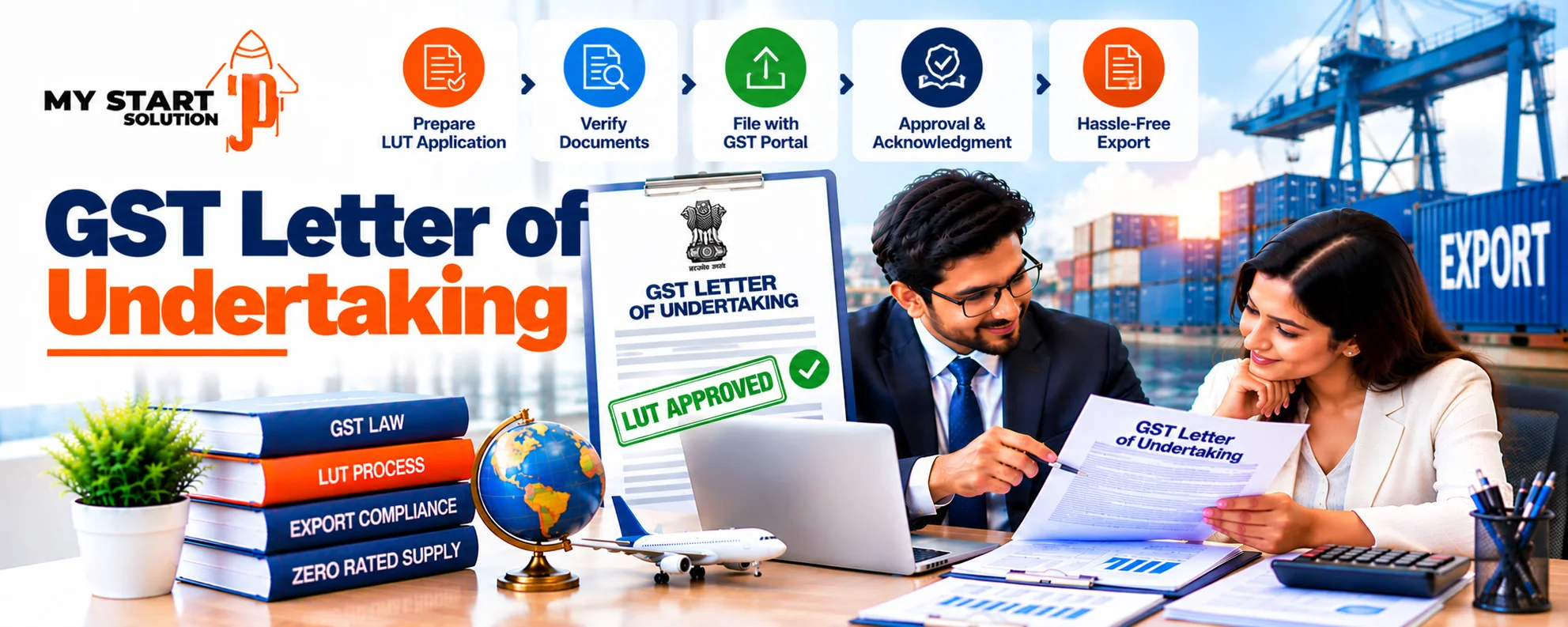
The GST LUT filing process generally involves the following steps:
Step 1: Review GST Registration
Check the taxpayer's GST registration details and confirm the intended export activity.
Step 2: Verify Eligibility and Information
Review the applicable eligibility conditions and gather the information needed for the declaration.
Step 3: Prepare Form GST RFD-11
Enter the required details and verify the declaration before submission.
Step 4: Submit the LUT Online
The authorised person completes the applicable verification and submits the form through the GST portal.
Step 5: Retain Filing Records
Save the available acknowledgement or reference details and maintain them with the business's GST records.
The precise portal steps may change over time, so applicants should follow the current GST portal process.
Important GST LUT Compliance Requirements
Filing an LUT is only one part of export compliance. Businesses must also follow the relevant GST provisions governing export supplies.
Important points include:
- An LUT is generally furnished for each financial year.
- Export invoices should contain the appropriate declaration for supplies made without payment of IGST.
- Export transactions must be reported correctly in the applicable GST returns.
- Exporters of goods and services must comply with the relevant time limits and conditions under Rule 96A of the CGST Rules.
- If prescribed export or payment conditions are not met, tax and applicable interest may become payable under the relevant provisions.
Businesses should review their transactions and seek professional advice if an export is delayed, payment is not received within the applicable period, or the transaction's export status is uncertain.
Why Choose My Startup Solution for GST LUT Filing?
Filing an LUT requires accurate business information and an understanding of the applicable GST requirements. Errors or missed compliance steps may create additional work for the taxpayer.
My Startup Solution helps exporters organise their filing information, understand the procedure, and manage the relevant documentation. The service is suitable for businesses seeking practical assistance with initial LUT filing or annual renewal.
The scope of assistance is determined by the taxpayer's registration status, export activities, and specific compliance needs. Professional support can help businesses approach the process with greater clarity while remaining responsible for accurate information and ongoing GST compliance.
Eligibility Criteria for GST Letter of Undertaking (LUT)
- GST Registration: Businesses must generally have an active GST registration to submit a Letter of Undertaking under the applicable GST provisions.
- Export of Goods or Services: Registered exporters who want to supply goods or services outside India without paying IGST upfront may apply for an LUT, subject to applicable conditions.
- Export Without Payment of IGST: An LUT allows eligible registered taxpayers to make qualifying zero-rated supplies without paying IGST at the time of export, subject to GST rules.
- Compliance with GST Rules: Applicants must meet the prescribed conditions for exports, filing requirements, and other applicable GST compliance obligations.
- Valid Business Details: The business should have accurate GST registration details, authorised signatory information, and supporting records for filing the LUT.
- Applicable Restrictions: Businesses that do not meet the prescribed eligibility conditions may need to follow the alternative procedure of exporting with payment of IGST, where permitted.
Documents required
Documents Required for GST Letter of Undertaking Registration
Registration process
A simple four-step process, start to finish.