

FDI Compliance / Filing FCTRC
FDI Compliance / Filing FCTRC helpsFDI Compliance / Filing FCTRC helps Indian companies report eligible transfers of securities involving residents and non-residents under applicable FEMA requirements. The service is useful for businesses handling foreign investment transfers and helps with documentation, filing, and coordination with the authorised dealer bank. Indian companies report eligible transfers of securities involving residents and non-residents under applicable FEMA requirements. The service is useful for businesses handling foreign investment transfers and helps with documentation, filing, and coordination with the authorised dealer bank.
Whats Included
- ✓ FC-TRS/FCTRC filing requirement assessment
- ✓ Preparation and review of filing information
- ✓ Supporting document and transaction detail checklist
- ✓ FIRMS/AD bank filing and compliance assistance
Get Free Expert Consultation
FDI Compliance / Filing FCTRC
The service is ofte...
Foreign investment transactions in India involve specific reporting and compliance requirements under the Foreign Exchange Management Act (FEMA) and applicable foreign investment regulations. When securities are transferred between a resident and a non-resident, the transaction may require reporting through Form FC-TRS under the RBI’s foreign investment reporting framework. RBI’s FIRMS platform provides for FC-TRS reporting through the Single Master Form (SMF).
The service is often searched for as FCTRC filing, although the relevant RBI reporting form is generally referred to as FC-TRS. My Startup Solution assists businesses in understanding the reporting requirement, preparing the necessary information and documents, and coordinating the filing process.
What Is FDI Compliance / FCTRC Filing?
FDI compliance refers to meeting the regulatory requirements applicable to foreign investment received, held, or transferred by an Indian entity. FCTRC or FC-TRS filing specifically relates to reporting certain transfers of equity instruments between residents and non-residents.
Depending on the nature of the transaction, companies may need to consider:
- FEMA and applicable foreign investment regulations
- Sectoral caps and investment conditions
- Pricing requirements
- Details of the transferor and transferee
- Consideration and remittance details
- Valuation documentation, wherever applicable
- KYC documentation
- Reporting through the RBI's FIRMS platform
- Requirements of the concerned Authorised Dealer (AD) bank
RBI guidance states that FC-TRS is used for reporting applicable transfers between residents and non-residents, with the reporting submitted through the prescribed process to the relevant AD bank.
Who May Need FC-TRS Filing?
FC-TRS compliance can be relevant to Indian companies and other eligible entities involved in foreign investment transactions where securities are transferred between a resident and a person resident outside India.
Common situations may include:
Transfer of Shares to a Non-Resident
An Indian resident may transfer eligible shares or other permitted securities to a non-resident investor, subject to applicable FEMA conditions.
Transfer of Shares from a Non-Resident
A non-resident investor may transfer eligible securities of an Indian company to a resident, subject to applicable regulatory and pricing requirements.
Transfer Through Sale or Other Permitted Transactions
Depending on the transaction structure, reporting requirements can arise for transfers by sale or other permitted modes. The exact compliance requirement depends on the facts of the transaction and applicable regulations.
What Does FCTRC / FC-TRS Compliance Involve?
The filing process requires accurate transaction information and supporting documents. The information generally covers the Indian entity, parties to the transfer, securities involved, consideration, transaction dates, shareholding information and other details required in the reporting form.
Our assistance can include:
- Understanding the nature of the foreign investment transaction
- Reviewing available transaction information
- Identifying relevant FC-TRS reporting requirements
- Preparing filing information based on documents provided
- Assisting with FIRMS/SMF filing requirements
- Coordinating information required for the AD bank
- Reviewing supporting documentation for consistency
- Assisting with responses to filing-related queries
RBI's FIRMS framework provides for FC-TRS reporting through the Single Master Form, and Business Users may need appropriate registration and bank-related verification before reporting.
Documents Commonly Required
The exact documents depend on the transaction structure, parties involved and requirements of the AD bank. Documents may include:
- Company incorporation and identification details
- PAN and CIN/LLPIN details, as applicable
- Shareholding pattern before and after transfer
- Share transfer details
- Transfer agreement or relevant transaction documents
- Details of buyer and seller
- Remittance and consideration details
- KYC documents
- Valuation report or certificate, where applicable
- Board or corporate approvals, where relevant
- Existing RBI/FEMA approvals, if applicable
- Other documents requested by the AD bank
The applicable documents should be confirmed based on the transaction because FEMA and foreign investment requirements can vary depending on the nature of the transfer.
Pricing and Valuation Considerations
Pricing is an important part of foreign investment compliance. Applicable pricing requirements may depend on the nature of the transaction, the type of security, the parties involved and whether any SEBI regulations apply.
RBI directions provide for specific pricing requirements in applicable transactions and recognize situations where SEBI-prescribed pricing applies. In certain cases, supporting certification may also be required with the FC-TRS filing.
Therefore, businesses should review the transaction terms and valuation documentation before completing the reporting process rather than treating every FC-TRS filing in the same way.
FC-TRS Filing Through RBI FIRMS
FC-TRS reporting is handled through the RBI's Foreign Investment Reporting and Management System (FIRMS). The FIRMS framework includes the Single Master Form for reporting various foreign investment-related transactions, including FC-TRS.
A typical process may involve:
- Reviewing the transaction and applicable FEMA requirements.
- Collecting transaction and supporting documents.
- Checking relevant foreign investment conditions.
- Preparing the FC-TRS information.
- Completing the required reporting through FIRMS/SMF.
- Submitting the filing through the applicable AD bank process.
- Responding to queries or providing additional information, if requested.
The actual steps can vary depending on the transaction and the bank's internal process.
Why Professional Assistance Can Help
FCTRC/FC-TRS filing involves more than entering information into an online form. Errors in transaction details, shareholding information, consideration amounts, valuation documents or supporting records can create additional clarification requirements.
Professional assistance can help businesses with:
- Understanding the applicable reporting route
- Organising transaction information
- Checking documents before filing
- Preparing the required filing information
- Maintaining consistency between transaction documents and reported data
- Coordinating with the relevant AD bank
- Addressing filing-related clarification requirements
My Startup Solution provides assistance based on the specific nature of the foreign investment transaction and the information supplied by the client.
FC-TRS Compliance Timeline
The applicable reporting timeline should be checked based on the transaction date and current FEMA/RBI requirements. RBI materials have prescribed FC-TRS reporting within 60 days from receipt of consideration for applicable transfer transactions. Because regulatory requirements can change and transaction structures differ, the applicable timeline should be confirmed before filing.
Businesses should therefore avoid delaying the review of a foreign share transfer, especially where the transaction has already been completed.
FDI Compliance Support for Indian Businesses
Foreign investment compliance can involve FEMA requirements, RBI reporting, valuation, KYC and AD bank coordination. A properly organised compliance process helps the company maintain appropriate records and address the reporting requirements associated with the transaction.
My Startup Solution can assist Indian businesses with FDI Compliance / Filing FCTRC, including transaction review, document preparation support and FC-TRS filing assistance. For every transaction, the exact requirements should be determined from the current applicable FEMA rules, RBI directions and the facts of the transaction.
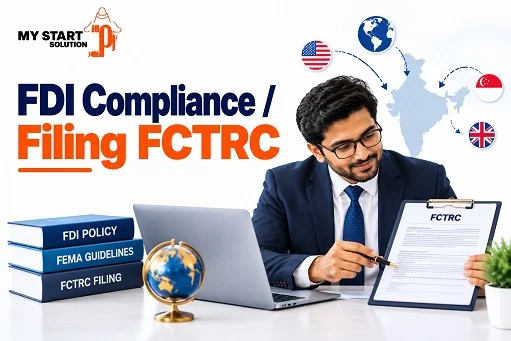
Who Needs to File FCTRC for FDI Transactions
- Companies Receiving FDI: Indian companies that have received foreign investment and need to report applicable transactions to the RBI may need to complete the relevant FCTRC filing.
- Transfer of Shares to Non-Resident: FCTRC compliance may apply to eligible transactions involving the transfer of equity instruments between residents and non-residents.
- Transfer from Non-Resident to Resident: Transactions where securities are transferred by a non-resident to a resident may require reporting and supporting documentation under applicable FEMA requirements.
- Foreign Investors and Indian Entities: Both the Indian company and parties involved in an FDI transaction should ensure that the transaction details, valuation, and supporting records meet applicable regulatory requirements.
- FEMA Compliance: The transaction should comply with applicable FEMA provisions, sectoral caps, pricing guidelines, and other RBI requirements before filing.
- Timely Reporting: Eligible transactions should be reported within the applicable regulatory timeline to avoid delays, additional compliance requirements, or other regulatory issues.
Documents required
Documents Required for FCTRC Filing
Registration process
A simple four-step process, start to finish.