
EPR Registration
EPR Registration helps eligible producers, importers, and brand owners meet applicable waste management responsibilities in India. My Startup Solution assists businesses with eligibility checks, document preparation, application filing, and registration-related guidance to help them understand and manage their Extended Producer Responsibility obligations.
Whats Included
- ✓ EPR eligibility assessment and waste category identification.
- ✓ Document checklist and application information review.
- ✓ Online registration application preparation assistance.
- ✓ Guidance on application queries and applicable post-registration compliance.
Get Free Expert Consultation
EPR Registration
EPR registration may be required for businesses dealing with plastic packaging, electrical and electronic equipment, batteries, tyres, use...
Extended Producer Responsibility (EPR) is an environmental compliance framework that makes certain producers, importers, and other regulated entities responsible for managing waste associated with their products or packaging. In India, EPR requirements vary according to the type of waste, the business activity, and the applicable environmental regulations.
EPR registration may be required for businesses dealing with plastic packaging, electrical and electronic equipment, batteries, tyres, used oil, and other waste categories covered by relevant rules. The applicable registration authority, documentation, reporting requirements, and waste management obligations depend on the category involved.
My Startup Solution assists businesses in understanding EPR requirements, preparing application documents, and managing registration-related formalities. Our support is tailored to the relevant waste category and the business's activities.
What Is EPR Registration?
EPR registration is the regulatory registration required for eligible entities under applicable Extended Producer Responsibility rules. It establishes the entity's details within the relevant environmental compliance system and supports the monitoring of its waste management responsibilities.
Depending on the applicable rules, registered businesses may need to arrange recycling or other authorised waste processing, fulfil prescribed targets, maintain records, and submit periodic or annual returns.
The objective is to improve accountability for waste generated by products and packaging and encourage environmentally responsible waste management.
Types of EPR Registration in India
Different waste categories have separate regulatory requirements and registration procedures.
- Plastic Packaging EPR: Applies to eligible producers, importers, and brand owners covered by the Plastic Waste Management Rules.
- E-Waste EPR: Applies to producers of specified electrical and electronic equipment covered by the E-Waste (Management) Rules, 2022.
- Battery Waste EPR: Covers eligible producers under the Battery Waste Management Rules, 2022.
- Waste Tyre EPR: Applies to relevant entities covered by the applicable waste tyre regulations.
- Used Oil EPR: Applies to entities covered by the applicable used oil waste management framework.
Registration requirements must be checked separately for each category. A business may have obligations under more than one framework depending on its products and activities.
Who Needs EPR Registration?
EPR registration may be necessary for businesses whose activities fall within the definitions and requirements prescribed by the relevant waste management rules.
Common examples include:
- Manufacturers selling products under their own brand.
- Importers bringing regulated products or packaged commodities into India.
- Brand owners placing covered products or packaging on the market.
- Businesses manufacturing or importing specified electronic equipment.
- Battery producers covered by the Battery Waste Management Rules.
- Eligible producers and other regulated stakeholders covered by waste tyre or used oil rules.
Not every business requires EPR registration. Eligibility depends on the relevant rules, product category, business role, and applicable exemptions or conditions. A review of the business activity is therefore recommended before applying.
Our EPR Registration Services
1. EPR Eligibility Assessment
The first step is to identify the applicable EPR framework and determine whether the business falls within its scope.
The assessment may include reviewing:
- Nature of the products or packaging.
- Manufacturing, importing, or brand ownership activities.
- Relevant waste category and product classification.
- Existing environmental registrations.
- Applicable registration authority and compliance requirements.
This helps establish the appropriate application route before documents are prepared.
2. Document Preparation and Verification
An EPR application requires accurate business and product information. The supporting documents depend on the waste category and the registration portal.
Assistance may include reviewing and organising:
- PAN and business registration details.
- GST registration information, where applicable.
- Registered office and authorised person's details.
- Product and packaging information.
- Manufacturing or import-related records.
- Sales, quantity, and material data required by the applicable framework.
- Existing environmental permissions or registrations, where relevant.
- Declarations and undertakings required for the application.
The final document checklist is prepared according to the relevant category and current application requirements.
3. Online EPR Application Assistance
EPR registration applications are generally submitted through the designated government portal for the relevant waste category.
My Startup Solution assists with preparing application information, organising supporting documents, checking data consistency, and guiding the applicant through the applicable submission process.
The application must contain accurate information supported by the business's records. The competent authority determines whether registration can be granted and whether further clarification is required.
4. EPR Compliance Planning
Registration is only one part of the EPR compliance process. Depending on the applicable rules, a business may also need to meet waste processing targets, maintain records, or submit returns.
Support may include identifying relevant obligations, reviewing available sales and product data, explaining reporting requirements, and helping organise information for future compliance.
5. Application Clarification and Follow-Up
If the registration authority requests additional information or clarification, the applicant may need to provide supporting records or correct incomplete details.
Assistance may include reviewing the query, identifying the relevant documents, preparing draft explanations, and guiding the applicant through the applicable follow-up process. Approval remains subject to the authority's review and applicable regulations.
Documents Required for EPR Registration
The exact documents depend on the waste category and the applicant's business activities. Common requirements may include:
- PAN and business constitution documents.
- GST registration certificate, where applicable.
- Identity and contact details of the authorised person.
- Registered office details.
- Product specifications and applicable category information.
- Manufacturing, import, sales, or packaging data.
- Relevant environmental permissions, if required.
- Prescribed declarations and supporting records.
Additional documents may be necessary for specific categories, such as electronic equipment, batteries, plastic packaging, or waste processing activities. Applicants should check the latest requirements on the relevant official portal before filing.
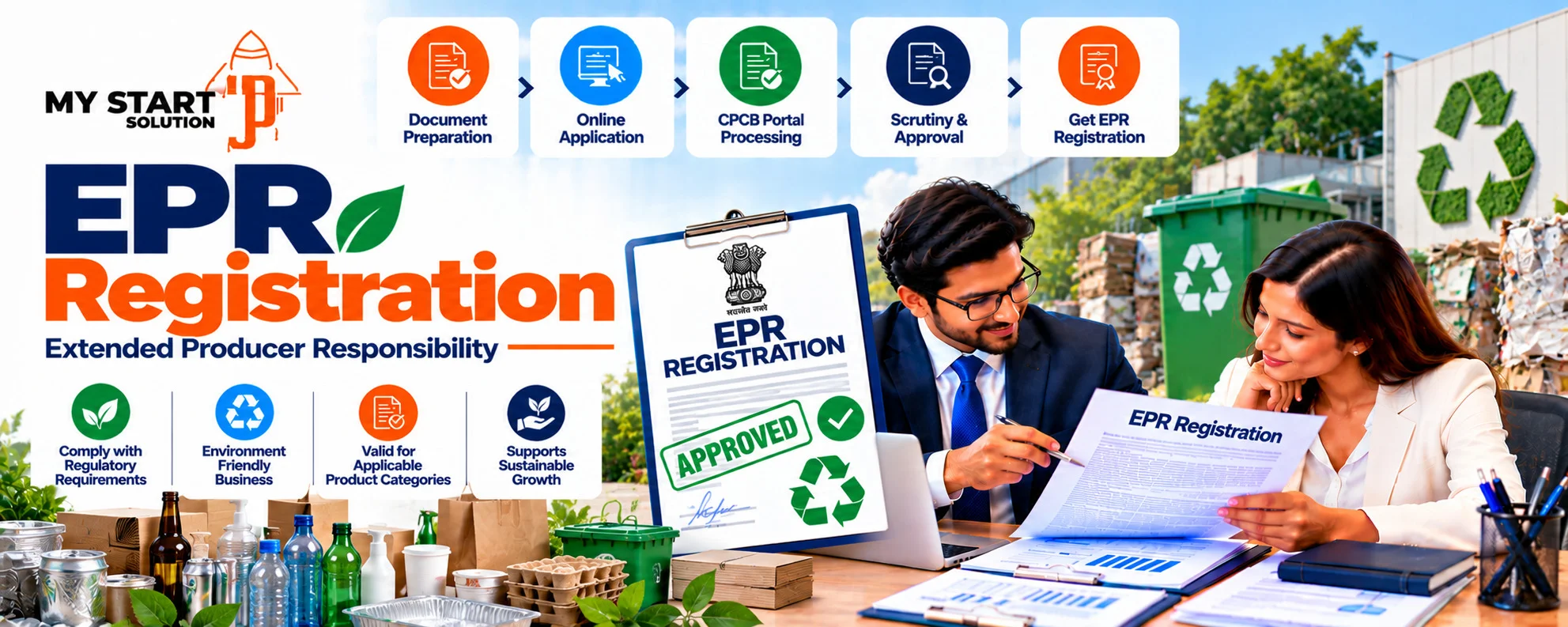
EPR Registration Process
The registration process generally involves the following steps:
Step 1: Business Assessment
Review the products, packaging, and business activities to identify the relevant EPR rules.
Step 2: Document Collection
Gather the required business records, product information, and supporting documents.
Step 3: Application Preparation
Prepare the application and check that the submitted information matches the available records.
Step 4: Online Submission
Submit the application through the designated portal or applicable registration authority.
Step 5: Clarification and Review
Respond to any additional information requests made by the authority, where necessary.
Step 6: Registration and Ongoing Compliance
After approval, review the registration conditions and identify any applicable reporting, recycling, recordkeeping, and renewal-related requirements.
The timeline depends on the registration category, completeness of the application, and the authority's review.
Why Choose My Startup Solution for EPR Registration?
EPR requirements can differ significantly between waste categories. Choosing the correct registration route and preparing consistent records can help businesses manage the application process more effectively.
My Startup Solution provides assistance with:
- Identifying the relevant EPR registration category.
- Understanding applicable documentation requirements.
- Preparing and reviewing application information.
- Managing registration-related queries and follow-up.
- Understanding ongoing environmental compliance responsibilities.
Our approach focuses on practical guidance based on the business's activities and the applicable regulatory framework. Registration approval, processing time, and compliance obligations remain subject to the relevant authority and current rules.
EPR Registration and Pollution Control NOC
EPR registration and a Pollution Control NOC are related to environmental compliance, but they are not the same approval.
EPR registration addresses specified waste management responsibilities under the applicable EPR framework. A Pollution Control NOC or consent may be required for certain industrial or commercial activities under applicable pollution control laws and state-specific procedures.
Whether a business needs one or both depends on its operations, waste category, location, and regulatory requirements. Businesses should assess these requirements separately rather than assume that obtaining EPR registration automatically satisfies pollution control consent requirements.
My Startup Solution can help businesses understand the relevant compliance requirements and identify the appropriate application process.
Eligibility Criteria for EPR Registration
- Businesses Handling Regulated Products: Manufacturers, importers, brand owners, and other entities covered under applicable Extended Producer Responsibility (EPR) rules may need EPR registration based on their products and activities.
- Plastic Waste Generators and Brand Owners: Businesses manufacturing, importing, or selling products covered by Plastic Waste Management Rules may need to fulfil applicable EPR obligations.
- E-Waste Producers: Manufacturers and producers of electrical and electronic equipment covered under the E-Waste Management Rules may need registration and compliance with applicable responsibilities.
- Battery Producers and Importers: Businesses covered under the Battery Waste Management Rules may need EPR registration and must meet the relevant waste management obligations.
- Applicable Business Registration: Applicants should have the required business details, identification documents, and other information prescribed for their category of EPR registration.
- Compliance with Applicable Rules: Eligibility depends on the type of product, business activity, and relevant waste management regulations administered by the appropriate authority.
Documents required
Documents Required for EPR Registration in India
Registration process
A simple four-step process, start to finish.